
Mozart K. 265: Sheet Music + Interactive Practice
Practise from real musical scores with interactive feedback that helps you play more accurately and confidently. Start selected studies instantly—no signup required—or create a free account to unlock more music, dynamics practice, saved progress, and deeper performance insights.
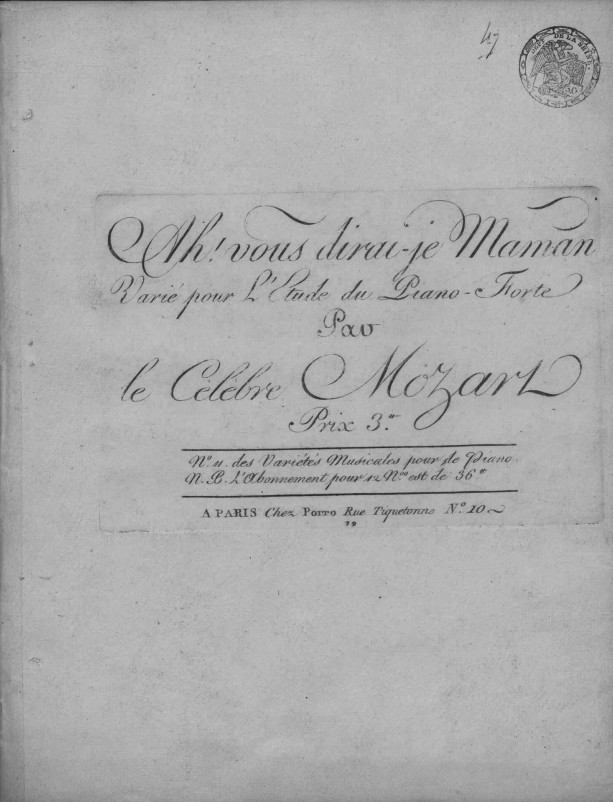
Opus Overview
Mozart’s 12 Variations, K. 265—a set of variations for solo piano on the French song “Ah, vous dirai-je, maman”—show his ability to transform a simple, familiar melody into a refined Classical keyboard work. Known today through its association with “Twinkle, Twinkle, Little Star,” the piece moves through varied textures, rhythms, articulations, and expressive characters while preserving the clarity of the original theme. It is especially useful for developing even fingerwork, clean phrasing, precise articulation, and controlled musical contrast.
Contents — 12 Variations - K. 265
Jump to any item to view details or start practicing.
-
Variation 1 adds flowing right-hand sixteenth-note motion to the Theme, creating a more animated texture while preserving its clear structure and simple classical character.
-
Variation 2 shifts the running sixteenth-note motion to the left hand while the right hand carries the theme in a simpler upper line
-
Variation 3 decorates the Theme with triplet-based right-hand figuration while the left hand gives a steadier harmonic support, creating a lighter, more animated texture..
-
Variation 4 decorates the familiar theme with flowing left-hand figuration while the right hand keeps the melody clear in simple notes and chords.
-
Variation 5 turns the theme into a playful rhythmic study, using short detached notes and rests to make the familiar melody feel lighter and more articulated.
-
Variation 6 presents the familiar melody in chords while the left hand maintains a flowing sixteenth-note accompaniment.
-
Variation 7 transforms the theme into quick sixteenth-note passagework, supported by simple left-hand chords.
-
Variation 8 shifts the theme into the minor mode, with expressive melodic turns and a darker harmonic character.
-
Variation 9 returns to C major with light, playful figuration and simple left-hand harmonic support.
-
Variation 10 features crossed-hand writing, with hand markings that require careful separate-hand practice before combining the voices.
-
Variation 11 slows the theme into an Adagio, with expressive ornamentation and sustained lyrical phrasing.
-
Variation 12 closes the set with a lively finale, turning the theme into brilliant passagework and strong cadential gestures.
-
The Theme presents the original melody of “Ah, vous dirai-je, maman” in a simple, balanced Classical setting, preparing the player for the rhythmic, textural, and expressive changes developed in the variations.